A Replicated Log keeps multiple nodes in sync by maintaining the same ordered sequence of entries across all cluster members. A leader accepts writes, appends them to its log, and replicates entries to followers. Once a majority confirms, the entry is committed. Every node applies committed entries in the same order, so they all reach the same state. Used by Raft (etcd, CockroachDB), Kafka (ISR replication), and ZooKeeper (ZAB protocol).
You have three database servers. A client writes balance = 500 to Server 1. Then another client reads from Server 2. What balance does it see?
If Server 2 hasn’t received the update yet, it returns stale data. The client sees an old balance. Maybe they overdraw their account. Maybe they see a phantom order. Maybe two servers disagree on who owns a record, and you get data corruption.
This is the problem at the heart of every distributed database, every consensus system, every coordination service. How do you keep multiple servers in sync, executing the same operations in the same order, even when networks drop packets and servers crash?
The answer is a pattern called Replicated Log. It’s the backbone of systems like etcd, CockroachDB, Apache Kafka, and ZooKeeper. And once you understand it, a lot of distributed systems start making sense.
The Problem: Order Matters More Than You Think
Let’s say you have two servers sharing a bank account with a balance of $1000. Two requests arrive at almost the same time:
- Withdraw $800 (from an ATM)
- Withdraw $600 (from a mobile app)
Both servers know the balance is $1000. Both need to check if there’s enough money before approving the withdrawal. But they process the requests in different order.
Server A processes the ATM withdrawal first:
- Withdraw $800 from $1000 → approved, balance is now $200
- Withdraw $600 from $200 → rejected, not enough funds
Server B processes the mobile withdrawal first:
- Withdraw $600 from $1000 → approved, balance is now $400
- Withdraw $800 from $400 → rejected, not enough funds
Now your two servers disagree. Server A says the balance is $200 and the ATM customer got their cash. Server B says the balance is $400 and the mobile customer got their cash. Two different customers. Two different balances. Two different versions of reality.
graph LR
    subgraph "Server A"
        A1["Withdraw $800 -> Approved"] --> A2["Withdraw $600 -> Rejected"]
        A2 --> A3["Balance: $200"]
    end

    subgraph "Server B"
        B1["Withdraw $600 -> Approved"] --> B2["Withdraw $800 -> Rejected"]
        B2 --> B3["Balance: $400"]
    end

    style A3 fill:#c8e6c9,stroke:#388e3c
    style B3 fill:#ffcdd2,stroke:#d32f2f
The problem is not that servers can’t agree on individual operations. They can. The problem is that they process operations in different orders, and order changes the outcome. A different order means a different customer gets approved, a different customer gets rejected, and the final balance is different.
This is why you need a replicated log.
What Is a Replicated Log?
A replicated log is an ordered, append-only sequence of entries that gets copied to every node in a cluster. Think of it as a shared notebook. Every server has a copy. Every copy has the exact same entries in the exact same order.
The idea is based on a simple but powerful insight called state machine replication: if you start with the same initial state and apply the same operations in the same order, you always end up with the same final state.
So instead of trying to sync the state across servers (which is complicated), you sync the log of operations. Each server maintains its own copy of the log. Each server applies the log entries in order. And because the logs are identical, the states are identical.
graph TD
    C[Client Request] --> L[Leader]

    L --> |"Append to log"| L1["Log: Entry 1, Entry 2, Entry 3"]
    L --> |"Replicate"| F1["Follower 1<br/>Log: Entry 1, Entry 2, Entry 3"]
    L --> |"Replicate"| F2["Follower 2<br/>Log: Entry 1, Entry 2, Entry 3"]

    L1 --> SM1["State Machine A<br/>balance = $700"]
    F1 --> SM2["State Machine B<br/>balance = $700"]
    F2 --> SM3["State Machine C<br/>balance = $700"]

    style L fill:#dbeafe,stroke:#3b82f6,stroke-width:2px
    style SM1 fill:#c8e6c9,stroke:#388e3c
    style SM2 fill:#c8e6c9,stroke:#388e3c
    style SM3 fill:#c8e6c9,stroke:#388e3c
All three state machines end up with the same balance because they all applied the same entries in the same order. This is the core idea.
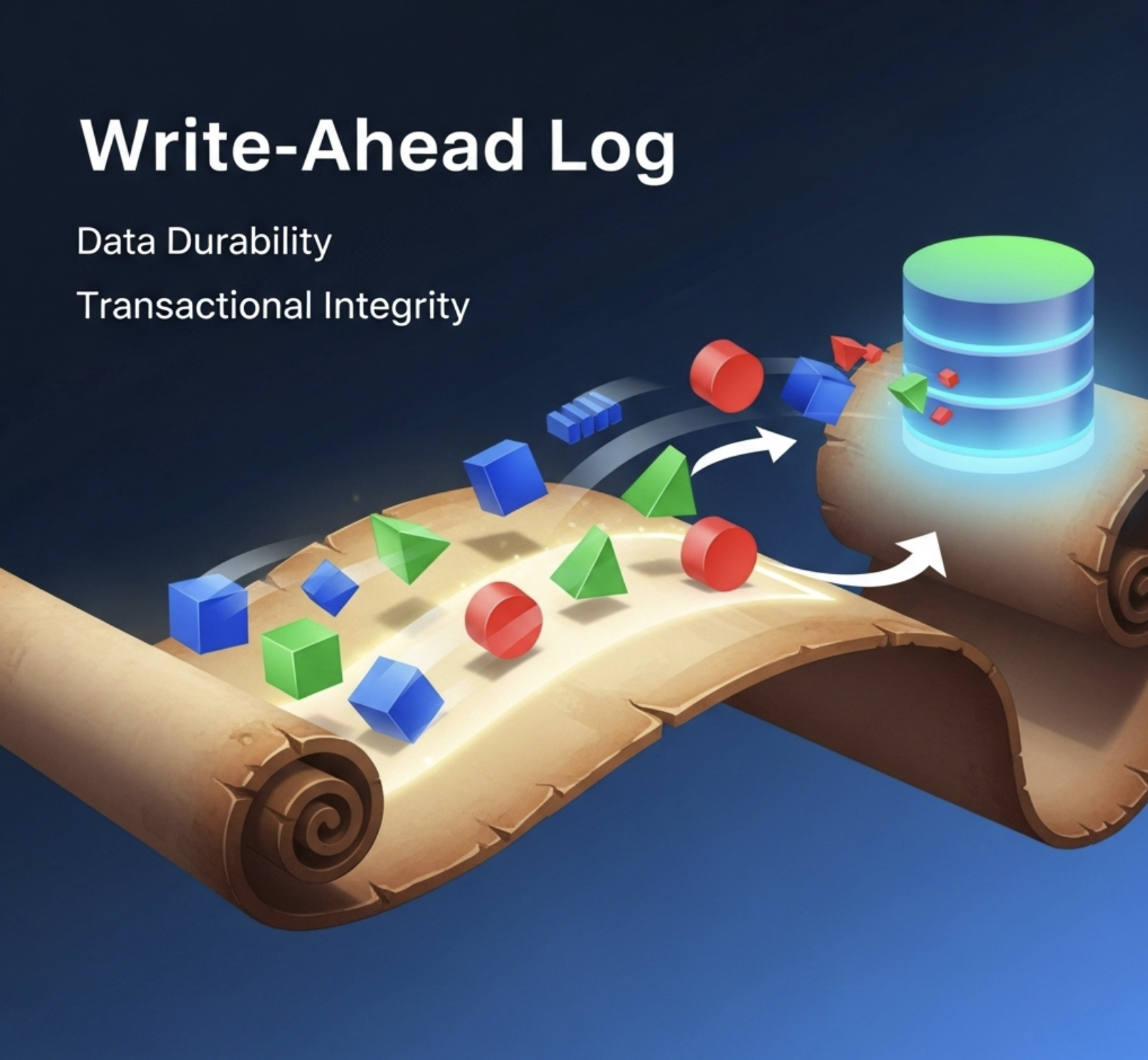
If you’re familiar with the Write-Ahead Log (WAL) pattern, the replicated log builds directly on top of it. WAL gives you durability on a single node. The replicated log gives you durability across the entire cluster.
How Replicated Log Works Step by Step
Let’s walk through the full lifecycle of a single client request in a replicated log system.
Step 1: Client Sends Request to Leader
In a replicated log system, one node is elected as the leader. All writes go through the leader. This is important because it establishes a single point of ordering. If multiple nodes could accept writes simultaneously, they might order things differently.
Step 2: Leader Appends to Its Own Log
The leader takes the client request and appends it as a new entry at the end of its local log. Each entry gets a monotonically increasing index number and includes the leader’s current term (generation number).
Step 3: Leader Sends Entry to Followers
The leader sends the new log entry to all follower nodes. In Raft, this is the AppendEntries RPC. The message includes the entry itself, the index, the term, and the index and term of the previous entry (for consistency checks).
Step 4: Followers Append and Acknowledge
Each follower receives the entry, checks that it matches (the previous entry index and term must match what the follower already has), appends the entry to its own log, and sends back an acknowledgment.
Step 5: Leader Commits After Majority
Once the leader receives acknowledgments from a majority of nodes (including itself), the entry is committed. This is the point of no return. The entry will never be lost or overwritten.
Step 6: Apply to State Machine
The leader applies the committed entry to its own state machine and responds to the client. Followers learn about the commit through subsequent messages from the leader and apply the entry to their own state machines.
sequenceDiagram
    participant C as Client
    participant L as Leader
    participant F1 as Follower 1
    participant F2 as Follower 2

    C->>L: Set balance = $700
    L->>L: Append to log (index 4)

    par Replicate to followers
        L->>F1: AppendEntries(index 4)
        L->>F2: AppendEntries(index 4)
    end

    F1->>F1: Append to log
    F1->>L: Success

    F2->>F2: Append to log
    F2->>L: Success

    Note over L: Majority reached (3/3)
    L->>L: Commit index 4
    L->>L: Apply to state machine
    L->>C: OK

    Note over F1,F2: Learn commit via next<br/>AppendEntries from leader
    F1->>F1: Apply to state machine
    F2->>F2: Apply to state machine
Why Majority Matters
The leader doesn’t wait for all followers. It only waits for a majority. In a 5-node cluster, the leader needs 3 acknowledgments (including itself). This means the system can tolerate 2 node failures and still make progress.
This is where the replicated log pattern connects to the Majority Quorum pattern. The quorum ensures that any committed entry exists on at least a majority of nodes. Even if the minority nodes crash, the committed data survives on the majority.
The High-Water Mark: What’s Safe to Read
Not every entry in the log is committed. The leader might have appended entries that followers haven’t acknowledged yet. If a client reads from a follower, should the follower serve those uncommitted entries?
No. Uncommitted entries can still be overwritten if the leader crashes before getting majority acknowledgment.
This is where the high-water mark (also called commit index) comes in. It’s an index that tracks the last log entry safely replicated to a majority. Only entries at or below the high-water mark are committed. Only committed entries get applied to the state machine.
graph LR
    subgraph "Leader Log"
        E1["Entry 1<br/>Committed"] --- E2["Entry 2<br/>Committed"] --- E3["Entry 3<br/>Committed"] --- E4["Entry 4<br/>Uncommitted"] --- E5["Entry 5<br/>Uncommitted"]
    end

    HW["High-Water Mark"] -.-> E3

    style E1 fill:#c8e6c9,stroke:#388e3c
    style E2 fill:#c8e6c9,stroke:#388e3c
    style E3 fill:#c8e6c9,stroke:#388e3c
    style E4 fill:#fff3e0,stroke:#f57c00
    style E5 fill:#fff3e0,stroke:#f57c00
    style HW fill:#e3f2fd,stroke:#1565c0,stroke-width:2px
The leader communicates the high-water mark to followers along with log entries. Each follower updates its own commit index accordingly and only applies entries up to that point.
This pattern has a nice side effect: followers can safely serve read requests for any data derived from committed log entries. This is how systems like etcd and CockroachDB scale reads across the cluster without sacrificing consistency.
What Happens When the Leader Crashes
The leader is a single point of ordering, but it’s not a single point of failure. When the leader crashes, a new leader gets elected. This is where things get interesting.
Leader Election
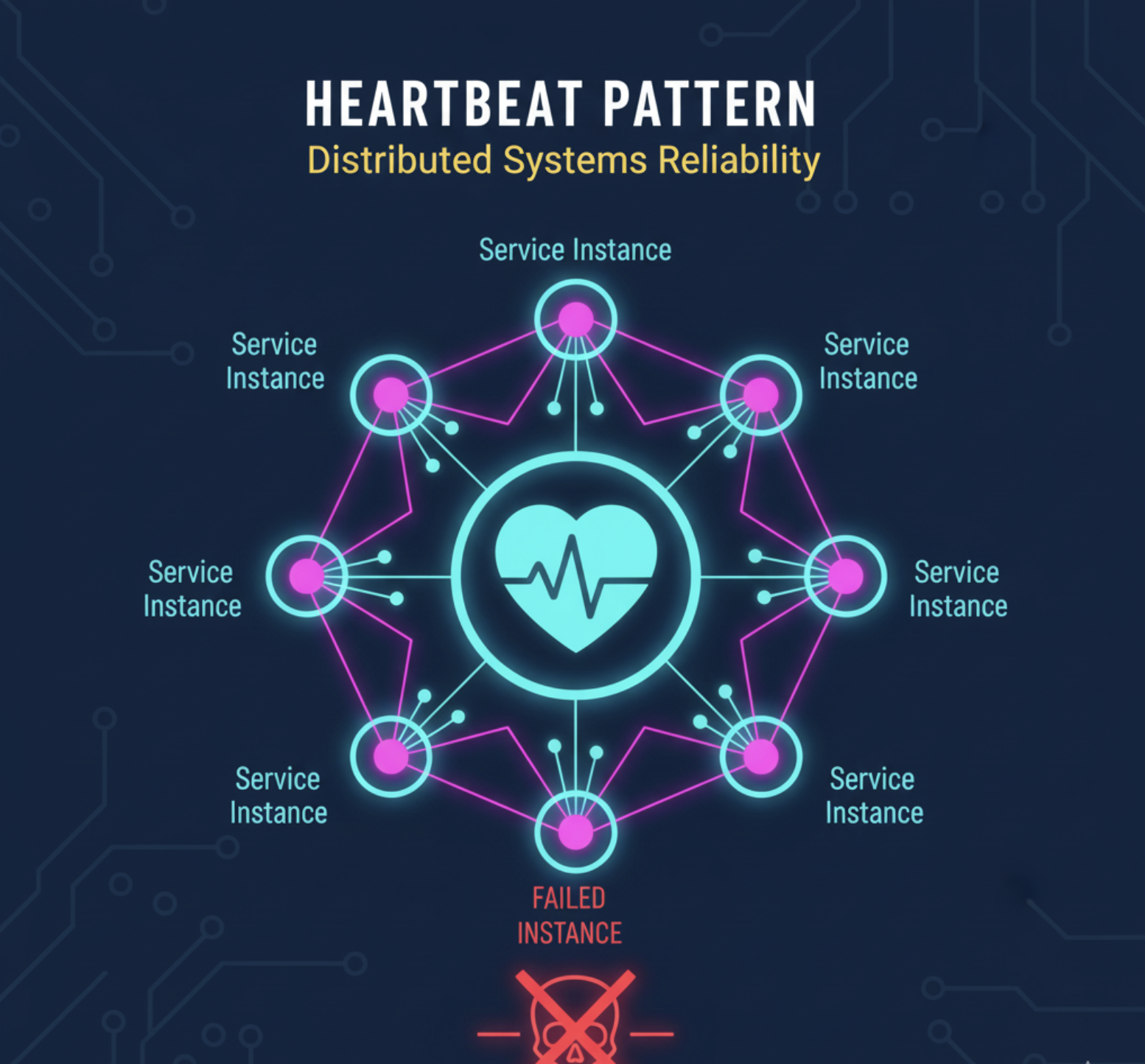
Followers detect the leader is gone through missed heartbeats. One of them starts an election by incrementing its term number and asking other nodes for votes. A node only votes for a candidate whose log is at least as up-to-date as its own. The candidate with the most complete log wins.
This voting rule is critical. It guarantees that the new leader has every committed entry. Since committed entries exist on a majority of nodes, and a candidate needs a majority of votes, at least one voter has every committed entry. And since voters only vote for candidates with equally or more complete logs, the winner must have all committed entries.
What Happens to Uncommitted Entries
Entries that were on the old leader but not committed (not replicated to a majority) might be lost. This is by design. The client never received a success response for these entries, so from the client’s perspective, the operation might not have happened. The client should retry.
graph TD
    subgraph "Before Crash"
        OL["Old Leader<br/>Entries: 1, 2, 3, 4, 5"]
        OF1["Follower 1<br/>Entries: 1, 2, 3, 4"]
        OF2["Follower 2<br/>Entries: 1, 2, 3"]
    end

    subgraph "After Election"
        NL["New Leader (was Follower 1)<br/>Entries: 1, 2, 3, 4"]
        NF["Follower 2<br/>Entries: 1, 2, 3 -> catches up to 4"]
    end

    OL -.->|"Crashes"| X["<i class='fas fa-times-circle text-danger'></i>"]
    OF1 -.->|"Elected"| NL
    OF2 -.->|"Follows new leader"| NF

    style X fill:#ffcdd2,stroke:#d32f2f
    style NL fill:#dbeafe,stroke:#3b82f6,stroke-width:2px
    style OL fill:#e0e0e0,stroke:#9e9e9e
Entry 5 was only on the old leader. It was never committed. It’s gone. Entry 4 was on the old leader and Follower 1. If 4 was committed (majority had it in a 3-node cluster: leader + Follower 1 = 2 out of 3, which is not a majority), then it’s actually not committed and could be lost too. But if the cluster had 5 nodes and 3 had entry 4, then it was committed and the new leader will have it.
This is why the majority quorum size matters so much. It determines how many nodes can fail before committed data is at risk.
Log Consistency: Keeping Followers in Line
In a running cluster, a follower’s log might fall behind the leader’s. This happens when:
- The follower was temporarily offline
- Network packets were dropped
- The follower was slow to process entries
The leader handles this with a consistency check. When it sends an AppendEntries request, it includes the index and term of the entry just before the new ones. The follower checks if it has that previous entry. If it doesn’t match, the follower rejects the request.
The leader then steps back one entry and tries again. It keeps stepping back until it finds a point where the logs match. Then it sends all entries from that point forward, overwriting any conflicting entries on the follower.
sequenceDiagram
    participant L as Leader
    participant F as Follower

    Note over L: Log: [1,2,3,4,5]
    Note over F: Log: [1,2,3]

    L->>F: AppendEntries(prev=5, entries=[6])
    F->>L: Reject (don't have entry 5)

    L->>F: AppendEntries(prev=4, entries=[5,6])
    F->>L: Reject (don't have entry 4)

    L->>F: AppendEntries(prev=3, entries=[4,5,6])
    F->>L: Accept (have entry 3)

    Note over F: Log: [1,2,3,4,5,6]
This backtracking mechanism ensures that eventually, every follower’s log matches the leader’s. The leader’s log is always the source of truth.
Log Compaction: Preventing Infinite Growth
If every operation ever performed lives in the log forever, the log grows without bound. A system running for years would have a massive log that takes forever to replay. And when a new node joins the cluster, it would need to replay every single entry from the beginning of time.
This is where log compaction (also called snapshotting) comes in.
The idea: periodically take a snapshot of the current state machine state. Once you have the snapshot, you can discard all log entries up to that point. The snapshot represents the cumulative effect of all those entries.
graph LR
    subgraph "Before Compaction"
        B1["Entry 1"] --- B2["Entry 2"] --- B3["Entry 3"] --- B4["Entry 4"] --- B5["Entry 5"] --- B6["Entry 6"] --- B7["Entry 7"] --- B8["Entry 8"]
    end

    subgraph "After Compaction"
        S["Snapshot<br/>(state at Entry 5)"] --- A6["Entry 6"] --- A7["Entry 7"] --- A8["Entry 8"]
    end

    style S fill:#e3f2fd,stroke:#1565c0,stroke-width:2px
    style B1 fill:#e0e0e0,stroke:#9e9e9e
    style B2 fill:#e0e0e0,stroke:#9e9e9e
    style B3 fill:#e0e0e0,stroke:#9e9e9e
    style B4 fill:#e0e0e0,stroke:#9e9e9e
    style B5 fill:#e0e0e0,stroke:#9e9e9e
When a new node joins:
- Leader sends the latest snapshot
- New node loads the snapshot (instant state recovery)
- Leader sends log entries after the snapshot
- New node replays those entries to catch up
This makes recovery fast and keeps storage bounded. Both Raft and ZAB use this approach. Kafka uses a similar concept with log segment retention and compaction.
Real-World Systems That Use Replicated Logs
Raft (etcd, CockroachDB, Consul, TiKV)
Raft is the most well-known implementation of the replicated log pattern. Designed by Diego Ongaro and John Ousterhout at Stanford in 2014, Raft was explicitly built to be understandable (unlike Paxos, which is notoriously hard to implement correctly).
Raft uses a replicated log as its core mechanism:
- A leader accepts all writes
- Log entries are replicated to followers via AppendEntries RPCs
- Entries are committed after majority acknowledgment
- Each node applies committed entries to its state machine
etcd (the coordination service behind Kubernetes) uses Raft for its key-value store. Every put or delete is a log entry. The entire cluster state is the result of applying all committed log entries.
CockroachDB uses Raft at the range level. Each range (a chunk of data) has its own Raft group with its own replicated log. This gives you distributed SQL with strong consistency guarantees.
Apache Kafka
Kafka takes the replicated log idea and makes the log itself the primary data structure. Each Kafka partition is an ordered, append-only log that gets replicated across multiple brokers.
Kafka’s replication model differs slightly from Raft:
- The partition leader writes entries to its log
- Followers pull entries from the leader (rather than the leader pushing)
- The ISR (In-Sync Replicas) set tracks which followers are caught up
- An entry is committed when all ISR members have it
The high-water mark in Kafka is called the Last Stable Offset (LSO) or High Watermark. Consumers can only read up to this point.
ZooKeeper (ZAB Protocol)
ZooKeeper uses its own protocol called ZAB (ZooKeeper Atomic Broadcast) for log replication. The pattern is similar:
- A leader proposes changes
- Followers acknowledge
- Once a majority acknowledges, the change is committed
- All nodes apply changes in the same order
ZooKeeper is used by many systems for distributed coordination, including older versions of Kafka (for broker metadata). Newer Kafka versions replaced ZooKeeper with KRaft, their own Raft-based protocol.
Google Spanner
Spanner uses Paxos-based log replication for each split (data partition). Each split has its own Paxos group, and writes are replicated through the Paxos log. This gives Spanner its globally consistent, distributed SQL capabilities.
Replicated Log vs Other Replication Approaches
Not every replication technique uses a replicated log. Here’s how it compares:
Statement-Based Replication
Instead of replicating the log, you replicate SQL statements. MySQL used this for a long time.
Problems:
- Non-deterministic functions (
NOW(),RAND()) produce different results on different nodes - Auto-incrementing columns can get different values
- Side effects (triggers, stored procedures) may behave differently
Row-Based Replication
Instead of replicating commands, replicate the actual data changes (before and after values). MySQL binary log in ROW format does this.
Benefits:
- Deterministic: no issues with
NOW()orRAND() - Works with any SQL statement
Downsides:
- More data to transfer (full row values vs. compact commands)
- Doesn’t support arbitrary state machine logic
Replicated Log (Command-Based)
The replicated log replicates the commands themselves in strict order.
Benefits:
- Compact: just the command, not the full data
- Works for any deterministic state machine, not just databases
- Enables strong consistency guarantees
Downsides:
- Commands must be deterministic
- Requires consensus protocol (added latency)
- All nodes must process every command (can’t skip ahead)
The Tradeoffs
The replicated log pattern is powerful, but it’s not free. Here’s what you’re signing up for:
Latency
Every write must wait for majority acknowledgment before the client gets a response. In a 5-node cluster spread across data centers, that means waiting for at least 3 nodes to confirm. If two of those nodes are on another continent, you’re adding hundreds of milliseconds per write.
Throughput
All writes go through a single leader. The leader’s network and disk bandwidth become the bottleneck. You can shard (like CockroachDB does with ranges), but each shard still has a single leader.
Complexity
Implementing a replicated log correctly is hard. Edge cases around leader elections, log conflicts, snapshotting, and cluster membership changes are subtle and error-prone. This is why most teams use an existing implementation (etcd, Raft library) rather than building their own.
Storage
Every node stores a full copy of the log (or at least the state derived from it). If your dataset is 100 GB and you have 5 replicas, you need 500 GB of storage minimum.
When to Use Replicated Log
graph TD
    A["Need strong consistency?"] -->|Yes| B["Can tolerate write latency?"]
    A -->|No| Z["Consider eventual consistency<br/>(gossip, CRDTs)"]

    B -->|Yes| C["Need fault tolerance?"]
    B -->|No| Y["Consider single-node<br/>with backups"]

    C -->|Yes| D["Write volume manageable<br/>by single leader?"]
    C -->|No| X["Consider single-node<br/>with WAL"]

    D -->|Yes| E["Replicated Log is a<br/>great fit"]
    D -->|No| W["Shard the data and use<br/>Replicated Log per shard"]

    style E fill:#c8e6c9,stroke:#388e3c
    style W fill:#c8e6c9,stroke:#388e3c
    style Z fill:#fff3e0,stroke:#f57c00
    style Y fill:#fff3e0,stroke:#f57c00
    style X fill:#fff3e0,stroke:#f57c00
Use replicated log when:
- You need strong consistency (linearizability or sequential consistency)
- Data loss is unacceptable
- You need automatic failover
- Your write throughput fits within a single leader (or you can shard)
Consider alternatives when:
- Eventual consistency is acceptable (use gossip dissemination)
- You need extreme write throughput from every node (consider leaderless replication)
- Your system is a single server (use a write-ahead log for durability)
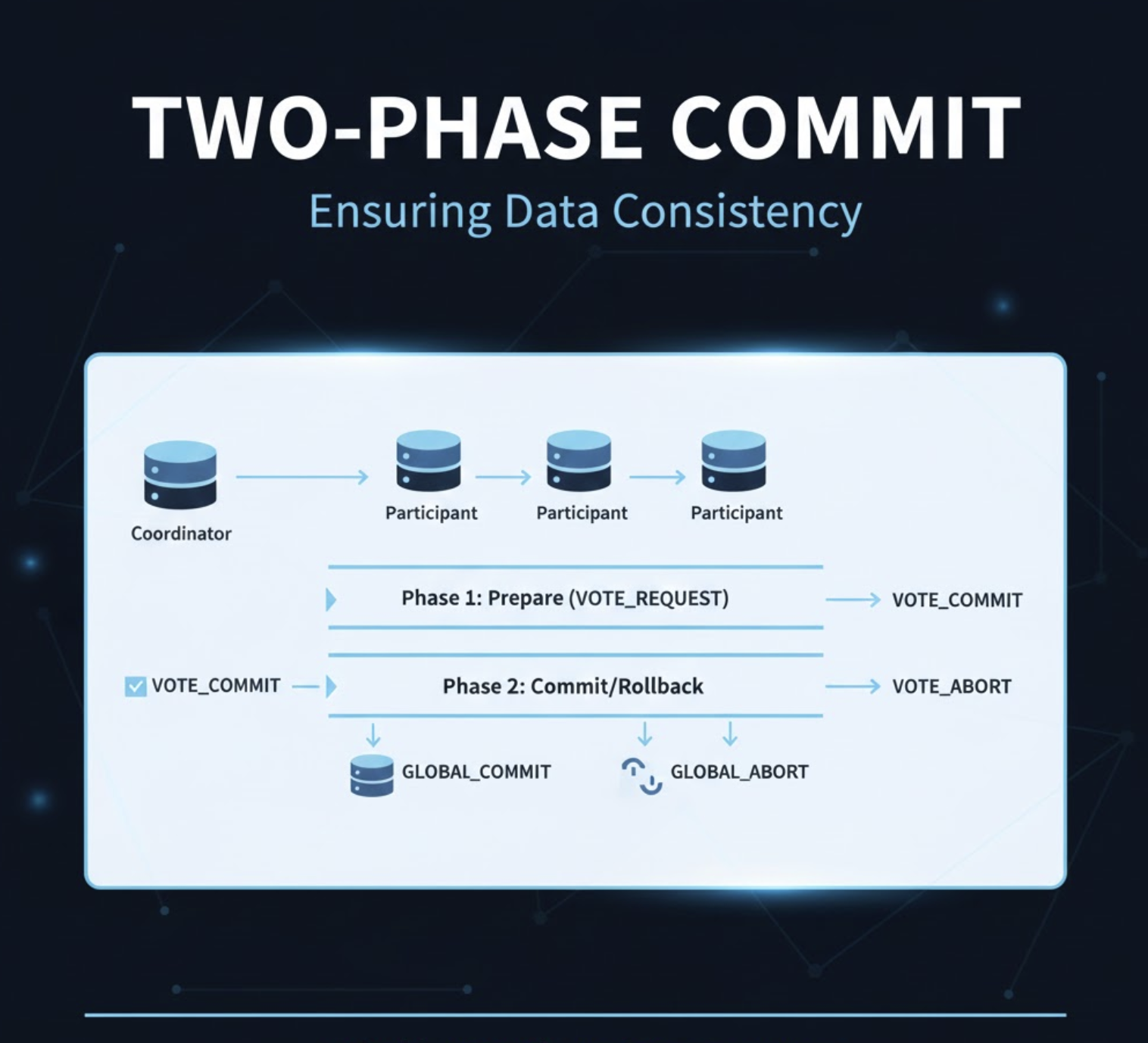
- You’re coordinating distributed transactions across services (consider two-phase commit)
Key Takeaways for Developers
-
Order is everything. The replicated log doesn’t just copy data. It copies an ordered sequence of commands. This ordering is what keeps all nodes consistent.
-
Majority quorum makes it fault-tolerant. By requiring only a majority of nodes to acknowledge, the system keeps working even when some nodes are down.
-
The high-water mark protects consistency. Never serve uncommitted data. The high-water mark tells you what’s safe to read.
-
Leader-based design simplifies ordering. Having a single leader that decides the order of log entries avoids the complexity of multi-leader conflicts.
-
Log compaction keeps storage bounded. Snapshots let you discard old log entries without losing state.
-
Don’t implement your own. Unless you’re building infrastructure at the level of etcd or CockroachDB, use an existing Raft library or a system that already implements this pattern.
Wrapping Up
The replicated log pattern is one of the most important building blocks in distributed systems. It turns the hard problem of keeping multiple servers in sync into a simpler problem: make sure everyone has the same ordered list of operations.
This pattern is behind the systems you use every day. When Kubernetes stores cluster state in etcd, it’s using a replicated log. When Kafka replicates your messages across brokers, it’s using a replicated log. When CockroachDB gives you distributed SQL that doesn’t lose data, it’s using a replicated log.
Understanding this pattern gives you a mental model for reasoning about consistency, fault tolerance, and replication in any distributed system you work with.
For more distributed systems patterns, check out Write-Ahead Log, Majority Quorum, Paxos Consensus, Heartbeat: Failure Detection, Gossip Dissemination, and How Kafka Works.
Further reading: Martin Fowler’s Patterns of Distributed Systems catalog covers the replicated log and related patterns in depth.