Busy week in tech. Apple confirmed a major Siri overhaul powered by Google’s Gemini. ClickHouse closed a $15 billion funding round. Next.js dropped a technical deep dive into Turbopack. Malaysia unblocked Grok after safety measures were added. Memory chip prices are surging and hitting consumer electronics. And a UK court approved a challenge against a large data center project. Here’s everything that happened.
Top Stories This Week
Apple Confirms Gemini-Powered Siri Chatbot for Late 2026 -
On January 22, Bloomberg reported that Apple is building its first AI chatbot to replace the current Siri interface.
What we know:
- Codenamed “Campos” - Will be embedded deeply into iPhone, iPad, and Mac
- Powered by Google Gemini - Apple and Google announced a partnership on January 12
- Expected with iOS 27 - Separate from the iOS 26.4 Siri update coming earlier
- Apple also working on AI wearable - A pin with cameras, speaker, and microphones
The Apple-Google deal:
In a joint statement, the companies said Apple’s next-generation Foundation Models will be based on Google’s Gemini models and cloud technology. Apple determined that “Google’s AI technology provides the most capable foundation” after careful evaluation.
Why this matters:
Apple has fallen behind OpenAI, Google, and Microsoft in AI. This is their attempt to catch up. Instead of building from scratch, they’re leveraging Google’s models - a significant strategic shift.
The competitive pressure:
OpenAI is expected to launch a physical AI device in H2 2026, developed with former Apple design chief Jony Ive. Apple needs to move fast.
ClickHouse Valued at $15 Billion -
ClickHouse closed a major funding round that values the company at $15 billion.
What is ClickHouse?
A column-oriented database designed for real-time analytics. It’s extremely fast at aggregating large datasets - think billions of rows queried in milliseconds. Companies use it for:
- Observability and logging
- Product analytics
- Real-time dashboards
- Data warehousing
Why this valuation:
Data infrastructure is in demand. Companies generate massive amounts of data and need tools to analyze it in real time. ClickHouse sits at the intersection of open source and enterprise - free to start, with managed services for scale.
What this means for developers:
If you haven’t looked at ClickHouse for analytics workloads, now might be the time. With this funding, expect accelerated development, better tooling, and a growing ecosystem.
Malaysia Unblocks Grok AI After Safety Measures -
On January 23, Malaysia lifted its block on xAI’s Grok chatbot after X implemented safety measures.
What happened:
Malaysia had blocked access to Grok due to content moderation and safety concerns. After X made changes to address these issues, the government restored access.
Why it matters:
AI regulation is getting real. Countries are willing to block AI services that don’t meet their safety standards. For AI companies, this means compliance isn’t optional - it affects market access.
Developer Tools & Platforms
Inside Turbopack: How It Builds Fast -
On January 20, Next.js published a detailed explanation of how Turbopack achieves its speed.
The core idea: incremental computation
Turbopack doesn’t rebuild your whole app when you save a file. It tracks exactly what changed and only recomputes those parts.
How it works:
- Fine-grained dependency tracking - Every piece of computed data knows exactly what inputs it depends on
- Change propagation - When a file changes, the system marks dependent computations as “dirty”
- Minimal recomputation - Only the dirty parts get recalculated, everything else stays cached
- Aggregation trees - Frequently accessed data uses summarization to avoid walking the entire graph
Why this matters:
In webpack, changing one file often triggers rebuilding many unrelated things. Turbopack’s approach means your save-to-refresh time stays fast regardless of project size.
Bottom line:
Turbopack isn’t just “faster webpack.” It’s a fundamentally different approach to incremental builds. Worth reading if you’re curious about build tool internals.
Azure Functions Adds MCP Support -
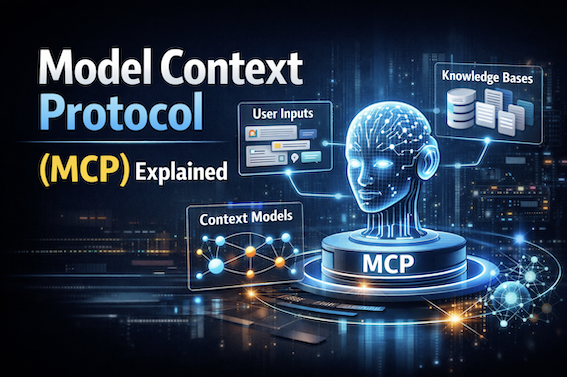
On January 19, Microsoft released Model Context Protocol (MCP) server support for Azure Functions.
What this enables:
- AI agents calling your functions - Build serverless backends that AI can invoke
- Tool integration - Connect AI models to your existing Azure infrastructure
- Agentic workflows - Create automated pipelines where AI triggers function execution
Why it matters:
As AI agents become more capable, they need ways to take actions beyond generating text. MCP support in Azure Functions makes it easy to give agents access to serverless compute.
Google Debuts “Me Meme” Feature -
Google launched “Me Meme,” an AI tool that creates personalized memes using your photos.
What it does:
Uses AI to generate memes featuring you based on your Google Photos library. Part of Google’s push to add AI features across its consumer products.
Developer relevance:
Shows how AI image generation is being integrated into mainstream apps. If you’re building consumer products, AI-powered personalization features are becoming table stakes.
Industry News
Amazon Plans Thousands More Job Cuts -
Reports indicate Amazon is planning thousands of additional corporate job cuts.
The context:
Tech layoffs continue into 2026. After the hiring surge during the pandemic, companies are still right-sizing their workforces. Amazon joins other tech giants in trimming corporate roles.
What it means:
The job market for tech workers remains challenging. Companies are prioritizing efficiency and automation over headcount growth.
Memory Chip Prices Surge, Hitting Consumer Electronics -
On January 22, Reuters reported that surging memory chip prices are impacting consumer electronics manufacturers.
What’s happening:
Memory chip prices have increased significantly, squeezing margins for device makers. This affects everything from smartphones to laptops to gaming consoles.
Why it matters for developers:
Hardware costs flow through to end users. If device prices rise, adoption of new hardware slows. This affects what you can expect from your users’ devices.
UK Court Greenlights Data Center Challenge -
On January 22, a UK court approved a legal challenge against a large data center project.
The issue:
Data centers face increasing scrutiny over energy consumption and environmental impact. This court decision allows opponents to challenge a major project.
The trend:
As AI and cloud computing drive demand for more data centers, expect more regulatory and legal challenges. Infrastructure planning is becoming harder, not easier.
Anthropic, OpenAI Join SpaceX as Top IPO Candidates -
AI companies Anthropic and OpenAI are now being mentioned alongside SpaceX as the most anticipated IPO candidates.
What this signals:
The AI boom has created companies valued in the tens of billions. Public market investors are eager for access. When these companies eventually IPO, it will be a major moment for the tech industry.
Security Updates
AI Library Vulnerabilities Worth Watching
Security researchers continue finding issues in popular AI/ML Python libraries.
The pattern:
AI libraries often use pickle-based serialization for model files. Pickle is convenient but inherently unsafe - loading a malicious pickle file can execute arbitrary code.
What to watch:
- NeMo (Nvidia) - Had RCE vulnerability via model files
- FlexTok (Bytedance) - Tokenization library with similar issues
- Uni2TS (Salesforce) - Time series library with unsafe deserialization
What developers should do:
- Update regularly - Keep AI libraries patched
- Audit model sources - Only load models from trusted sources
- Sandbox model loading - Consider running model loading in isolated environments
- Prefer safe formats - Libraries moving to SafeTensors are more secure
What This Week Teaches Us
Apple is playing catch-up in AI: The Gemini partnership shows Apple recognizes it’s behind. Instead of building from scratch, they’re leveraging Google’s technology. This is a pragmatic move, but it’s also an admission.
Build tool performance comes from fundamentals: Turbopack isn’t fast because of one trick. It’s fast because of careful architectural decisions about incremental computation.
AI regulation is getting teeth: Malaysia blocking and then unblocking Grok shows countries are willing to enforce AI safety requirements. Compliance is becoming a market access issue.
Data infrastructure funding remains hot: ClickHouse’s $15 billion valuation shows continued enterprise demand for analytics tools.
Hardware constraints affect everyone: Memory chip prices flowing through to device costs is a reminder that software ultimately runs on hardware, and hardware economics matter.
The Numbers That Matter
- $15 billion - ClickHouse valuation after funding round
- iOS 27 - Expected release for Apple’s new Siri chatbot
- January 12 - Date of Apple-Google Gemini partnership announcement
- 3 - AI libraries with disclosed RCE vulnerabilities (NeMo, FlexTok, Uni2TS)
Quick Hits
Apple Siri chatbot - Codenamed Campos, powered by Google Gemini, coming with iOS 27 in late 2026.
ClickHouse $15B - Open-source analytics database closes major funding round.
Turbopack explained - Next.js deep dive on incremental computation architecture.
Malaysia unblocks Grok - xAI’s chatbot restored after safety measures implemented.
Google Me Meme - AI-powered personalized meme generator in Google Photos.
Amazon layoffs - More corporate job cuts reported.
Memory chip surge - Rising prices hitting consumer electronics makers.
UK data center challenge - Court approves legal challenge against major project.
Azure Functions MCP - Build AI agents that call serverless functions.
Busier week than expected. The Apple-Google partnership for Siri is the big strategic story - Apple admitting it needs help to compete in AI. The Turbopack deep dive is worth your time if you care about build tools. And the Grok situation in Malaysia is a preview of how AI regulation will work: comply with local requirements or lose market access.
See you next week.